How to Make FB Ads That Convert
Running FB ads in 2025 is more than just setting up a campaign and hoping for the best. Meta’s advertising system relies heavily on AI-powered automation, making it essential for businesses to optimise their campaign structures, targeting, and budget allocation to get the best results.
Many advertisers struggle with questions like how to advertise on Facebook, how much budget they should allocate, or whether $20 per day is enough for Facebook ads. Others wonder if they can create Facebook ads for free or if advanced tools like Facebook Ads Manager and Meta Ads Manager are essential for performance tracking.
The key to successful FB advertising lies in structuring campaigns strategically. This includes setting up cold and warm audience campaigns, reducing ad in Facebook cost by consolidating ad sets, and leveraging AI-driven tools for optimisation. Whether you’re new to advertising or looking to scale your business, learning how to make FB ads effectively will help you drive higher engagement, better conversions, and a stronger return on investment (ROI).
How to Make FB Ads Work: Why Ad Set Consolidation Matters
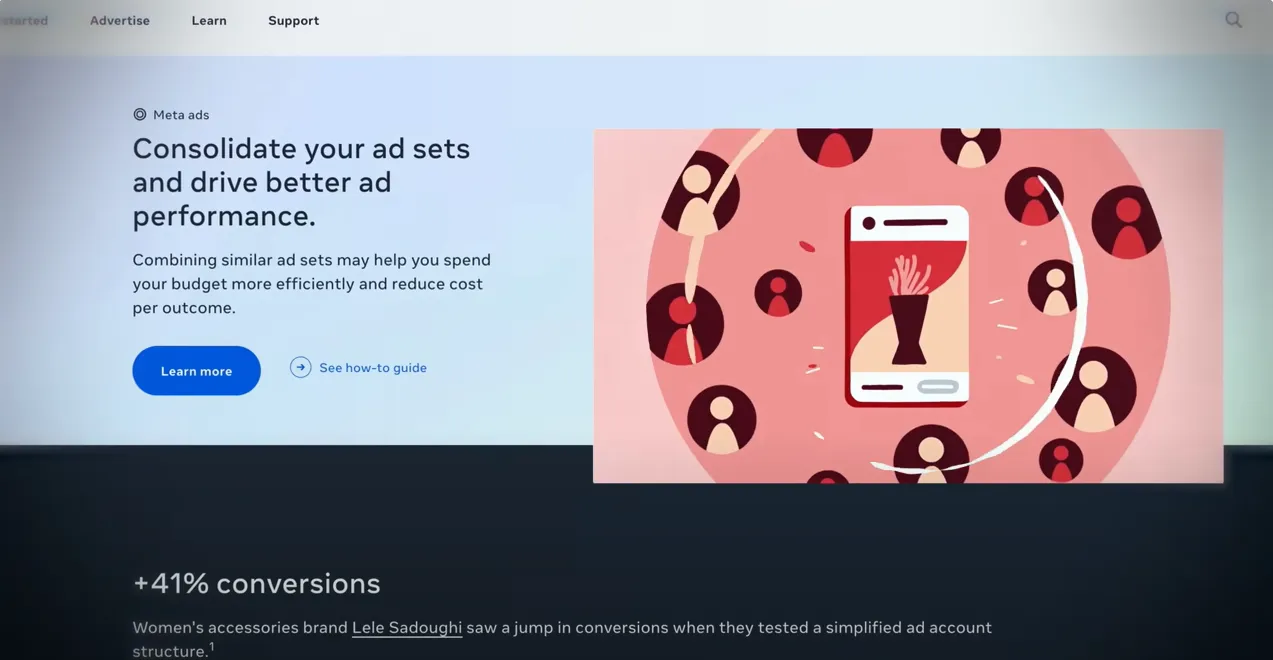
The Importance of Simplified Ad Structures
One of the biggest mistakes advertisers make is creating too many ad sets. While testing multiple audience segments might seem like a good strategy, it fragments the budget and slows down Meta’s learning process. Instead, Facebook Ads Manager recommends consolidating ad sets to allow the AI system to learn and optimise faster.
A simplified ad structure enables businesses to reduce internal competition within their campaigns, allowing Meta’s AI to make more efficient bid adjustments. When multiple ad sets are targeting similar audiences, businesses often experience auction overlap, which leads to higher costs per conversion.
By consolidating ad sets, businesses increase the amount of data Meta can use to make smarter, automated decisions about ad placement, targeting, and optimisation. This means better efficiency, lower ad spend, and improved overall performance. Learning how to make FB ads with the right ad structure can significantly improve ad delivery and return on investment.
How Budget Allocation Impacts FB Advertising Success
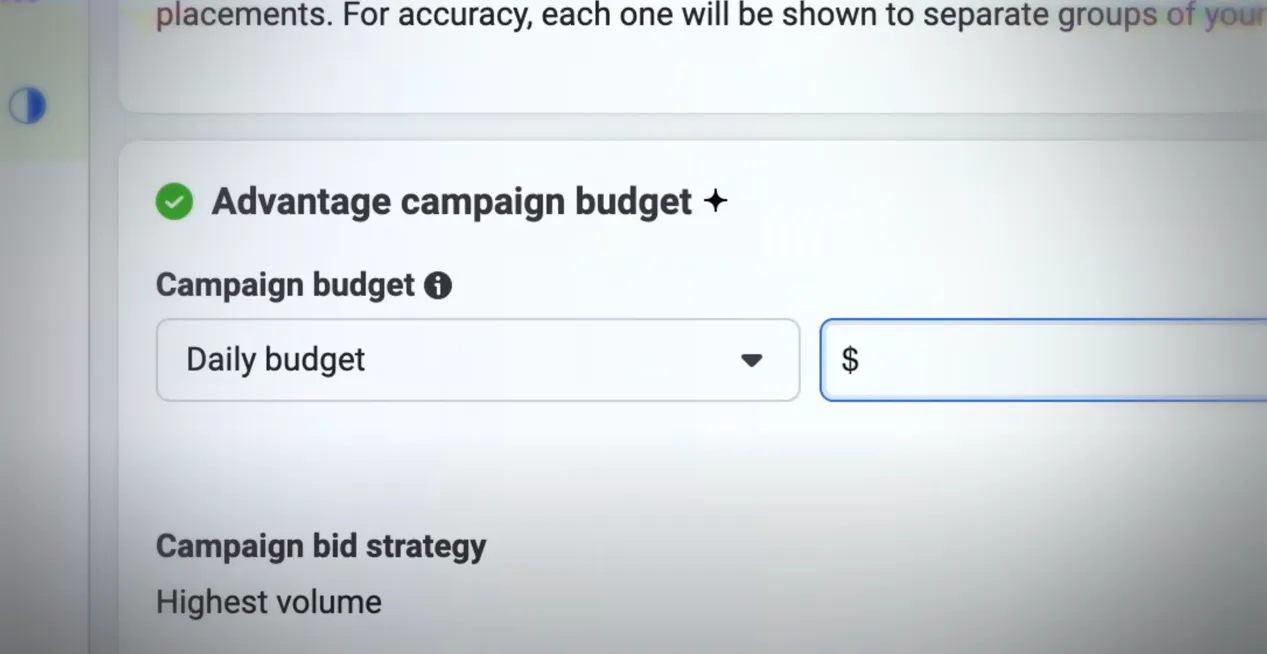
Regardless of whether you’re spending $20 per day or $100+ per day, budget allocation plays a critical role in ad performance.
- Smaller budgets benefit from fewer ad sets, allowing Meta’s AI to concentrate on a single audience and optimise faster.
- Larger budgets can support multiple ad sets, but only when necessary. Over-segmentation can result in higher ad costs and inefficient spending.
Proper budget allocation prevents unnecessary spending on low-performing ads and ensures that the highest-performing ad creatives receive the most investment. This means businesses must monitor key performance indicators (KPIs) such as click-through rates (CTR), cost per click (CPC), and return on ad spend (ROAS) to allocate budgets effectively.
Why Too Many Ad Sets Can Hurt Performance
One of the most common pitfalls we see in Facebook advertising is auction overlap—when multiple ad sets target the same audience and end up competing against each other. This drives up your cost per result and erodes campaign efficiency. Instead of fragmenting your targeting across several ad sets, a smarter move is to consolidate them into a single, well-optimised set. This gives Meta’s AI more room to work—automatically adjusting bids, reducing costs, and boosting conversions.
Ad consolidation also plays a critical role in scaling your campaigns effectively. As your ad spend increases, Meta’s algorithm becomes more efficient at distributing your budget across various high-performing segments. This ensures your ads are shown to users with the highest intent—not wasted on low-quality traffic. By learning how to structure Facebook ad campaigns with optimised ad sets, you’re setting your business up for stronger results and more sustainable growth.
How to Create Facebook Ads: The Best Campaign Structure
1. Structuring Direct Offer Campaigns
For businesses focused on lead generation or direct sales, the best approach is to set up two distinct campaigns:
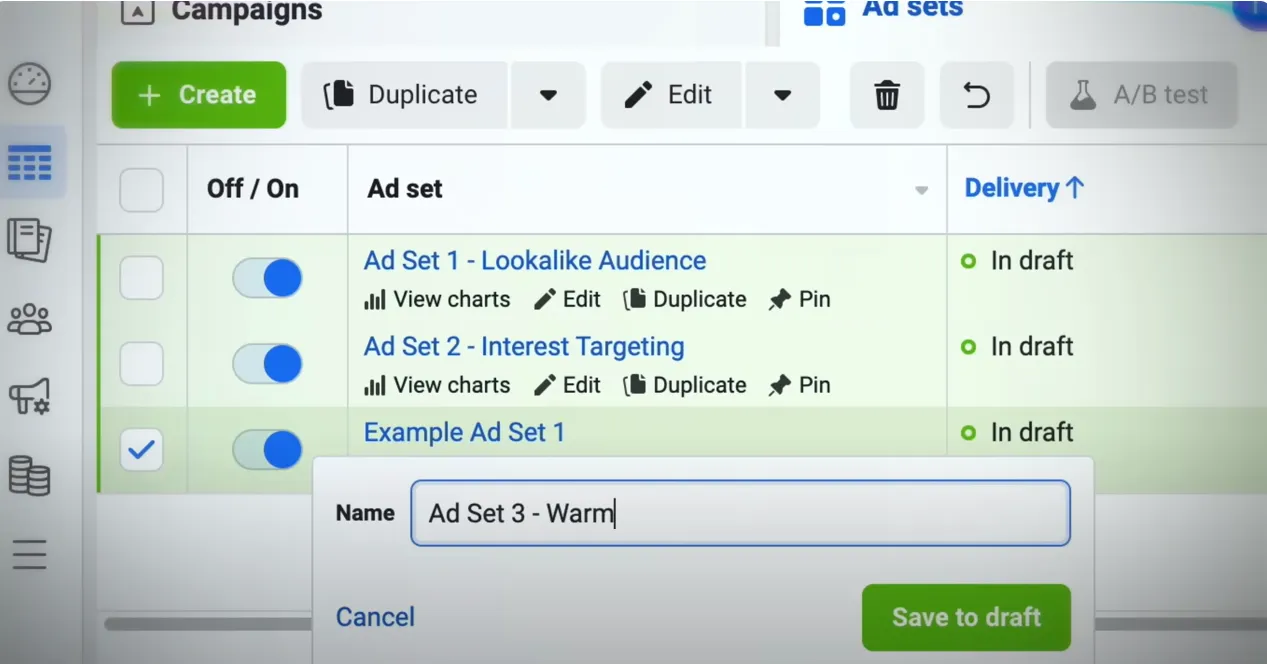
- Cold Audience Campaign – Uses open targeting or Advantage+ Audience to find new customers.
- Warm Audience Campaign – Retargets past website visitors, social media engagers, and email subscribers.
Each campaign should include one ad set, ensuring all data is consolidated for better optimisation. Using Facebook Ads Manager, businesses can monitor results and make necessary adjustments to improve conversions.
2. When to Use Multiple Campaigns
While consolidating ad sets is best for most businesses, there are exceptions:
- Different Product Ranges – Businesses with multiple product lines benefit from separate campaigns to tailor messaging.
- Testing New Ad Creatives – A separate campaign allows advertisers to test new creatives without affecting top-performing ads.
- Audience Segmentation – Some businesses need distinct campaigns for location-based targeting or specific demographics.
By organising campaigns effectively, businesses can improve their ad targeting and engagement rates, ensuring that different audience groups see relevant and personalised content.
Do Facebook Ads Make You Money?
Yes, Facebook ads can make you money, but success depends on proper strategy, targeting, and ad optimisation. Profitable Facebook ad campaigns share these common characteristics:
- Strong ad creatives that capture attention and drive clicks.
- Clear call-to-action (CTA) to encourage purchases, sign-ups, or conversions.
- AI-driven audience targeting to reach high-intent users.
- Smart budget allocation to maximise ad spend.
Businesses that follow these strategies often see a positive return on ad spend (ROAS), turning FB advertising into a profitable marketing channel.
By organising campaigns effectively, businesses can improve their ad targeting and engagement rates, ensuring that different audience groups see relevant and personalised content.
How Many Ads Should Be in an FB Ads Campaign?
Meta recommends keeping six or fewer ads per ad set. Here’s the ideal number based on budget:
- $10–$20 per day: Use two to three ads per ad set.
- $50–$100 per day: Use four to six ads per ad set.
- $500+ per day: Test up to six ads at once.
Too many ads in a single ad set can slow down Meta’s learning phase, making it harder to optimise performance. The best approach is:
- Start with six ads.
- Identify top-performing creatives.
- Remove low-performing ads.
- Introduce new ad variations gradually.
For eCommerce brands, Advantage+ Shopping Campaigns allow businesses to showcase multiple products within a single campaign. Dynamic Creative Ads let advertisers upload up to ten variations, allowing Facebook’s AI to test different creative combinations automatically.
How Do Beginners Learn Facebook Ads?
Beginners learning how to make FB ads should start with the basics of ad setup, audience targeting, and budget allocation. Here’s a step-by-step approach:
- Create a Business Page on Facebook – This is essential for running Facebook ads.
- Set Up Facebook Ads Manager – This tool allows you to manage campaigns and track performance.
- Understand Campaign Objectives – Choose whether you want traffic, engagement, conversions, or lead generation.
- Select the Right Audience – Use open targeting, interest-based targeting, or lookalike audiences.
- Test Multiple Ad Creatives – Experiment with different images, videos, and ad copy to find what performs best.
- Monitor Performance Metrics – Use Meta Ads Manager to track click-through rates, conversion rates, and ROAS.
Facebook offers free training through Meta Blueprint, helping beginners develop a strong foundation in FB advertising.
How to Make FB Ads More Effective with Facebook Ads Manager
A successful Facebook ad isn’t just about visuals—it’s about testing, refining, and optimizing ad performance. Instead of manually creating multiple ads with different headlines and descriptions, advertisers can use Facebook’s multi-text optimisation feature to test multiple versions of ad copy in a single ad.
Tracking the Right Metrics for Better Performance
To maximise performance, advertisers should track:
- Click-Through Rate (CTR) – Measures how often users click on your ad. A CTR above 2% is typically strong.
- Cost Per Click (CPC) – Lower CPC values indicate cost-efficient advertising.
- Conversion Rate – Tracks the percentage of users who complete a desired action.
- Return on Ad Spend (ROAS) – Measures revenue generated against ad spend. A ROAS above 3x is generally profitable.
Using Facebook Ads Manager, businesses can analyse performance data and adjust campaigns in real time to improve engagement and reduce ad in Facebook cost.
Additionally, understanding how to create a business page on Facebook plays a role in ad success. A well-optimised Facebook page improves credibility, increases engagement, and makes ads look more professional to potential customers.
How Much Do Facebook Ads Cost?
Facebook ad costs vary based on competition, audience targeting, and industry demand. On average:
- Cost Per Click (CPC): $0.50–$3.50
- Cost Per 1,000 Impressions (CPM): $7–$15
For a $20 daily budget, businesses can expect 100–300 clicks per month, while a $100+ budget reaches thousands of potential customers.
Cost efficiency depends on proper targeting, ad optimisation, and continuous testing. Businesses should regularly analyse performance metrics to ensure budget efficiency and high conversion rates.
Is Creating Facebook Ads Easy?
Yes, creating FB ads is simple with tools like Facebook Ads Manager for campaign setup, Meta Ads Manager for advanced tracking, and Advantage+ targeting for automated audience selection. However, running effective ads requires more than just setting them up.
Success depends on strong ad creatives that grab attention and drive engagement, consistent testing and optimisation to improve performance, and proper budget allocation to ensure ad spend goes to the right audience. Even though Facebook advertising has become more accessible, businesses must actively monitor campaign performance, adjust targeting, and refine ad creatives to avoid wasted spend.
By leveraging data from Facebook Ads Manager and Meta Ads Manager, businesses can track key metrics, make data-driven decisions, and continuously optimise their ads to improve results. A hands-on approach ensures lower costs, better engagement, and a higher return on investment.
How to Make FB Ads That Deliver High ROI
Mastering how to make FB ads in 2025 requires strategic planning, AI-driven targeting, and continuous optimisation. Reducing ad sets improves budget allocation and optimisation, while tools like Facebook Ads Manager and Meta Ads Manager help make data-driven decisions. Structuring campaigns correctly by separating cold and warm audiences ensures better targeting, while testing ad creatives helps minimise ad in Facebook cost and maximise conversions. Success in FB advertising isn’t about launching an ad and waiting—it requires constant testing and refinement. Whether your budget is $20 per day or $100 daily, making informed choices will help you advertise on Facebook effectively and achieve long-term success.
Want higher conversions and lower ad spend? Let Fancy Campaigns scale your business with expertly crafted Facebook ads. Get in touch today to start seeing results!